
OSM Facility | IST

Measuring Photons
Understanding Matter

Who we are

The right place to support your research.

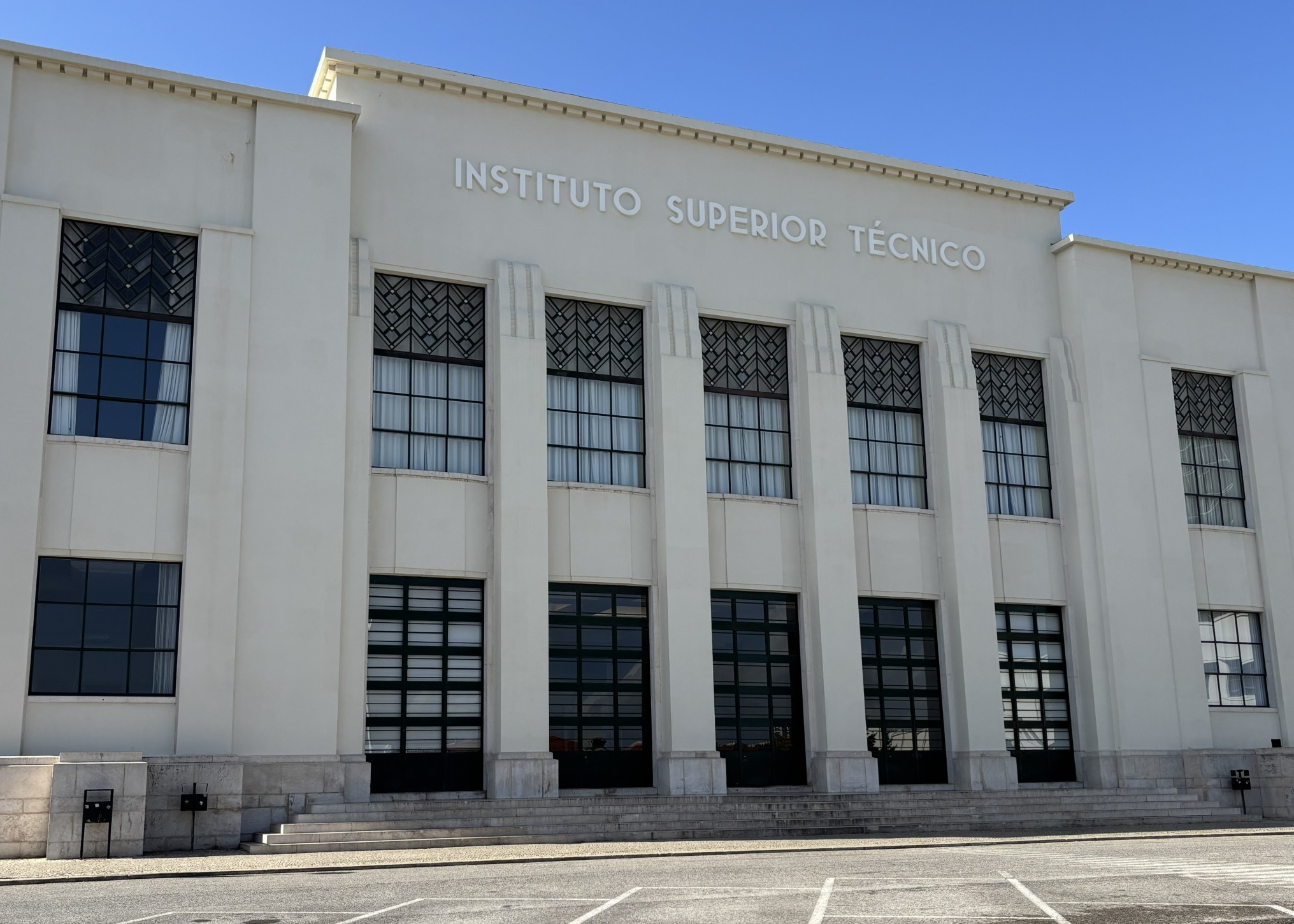
We are the Optical Spectroscopy and Microscopy Facility (OSM) at Instituto Superior Técnico (IST), Alameda Campus – a place where light meets matter, and where that encounter becomes insight.

Founded in 2026 by the Instituto de Bioengenharia e Biociências (iBB) and the Centro de Química Estrutural (CQE), we bring together optical instrumentation once scattered across two research units into one shared facility — open to everyone who needs it.

We specialize in molecular and vibrational spectroscopy, particle characterization, and optical microscopy: the tools to probe electronic and vibrational transitions, characterize particles, and image structures down to the nanoscale.

Techniques & instruments

What we can measure - and which instruments do it.

Absorption, Transmittance & reflectance

How much light a sample transmits - or reflects?

From ultra-violet to near-infrared, we measure what a sample absorbs, transmits, or reflects – liquids, solids, powders, films. Use this technhique for reaction kinetics, melting curves, nanoparticles, pigments, and thin-film optics.

Instruments Available:

  • Shimadzu UV-2600i

  • Jasco V660

  • Shimadzu MPC-2600A

Luminescence

How much light a sample emits - and how long for?

We measure what a sample emits after excitation, and how long it keeps glowing, from picosecond fluorescence to long-lived phosphorescence. Used for fluorophores, protein dynamics, energy transfer, and singlet oxygen detection.

Instruments Available:

  • Horiba Fluorolg-3 2iHR NIR

  • Jasco FP-8500

  • Horiba Fluorolog-3 11 TCSPC

  • Horiba DeltaFlex NIR

Raman & FTIR

Two complementary ways to probe molecular vibrations.

Raman measures scattered light, FTIR measures absorbed infrared – together they identify a material with far more confidence than either alone. Used for polymers, powders and crystalline forms, protein structure, and label-free chemical mapping in cells and tissue.

Instruments Available:

  • Horiba LabRAM HR Microscope

  • Bruker Vertex 70

  • Bruker Hyperion 2000 Microscope

Microscopy

Where a molecule goes - and what happens to it there?

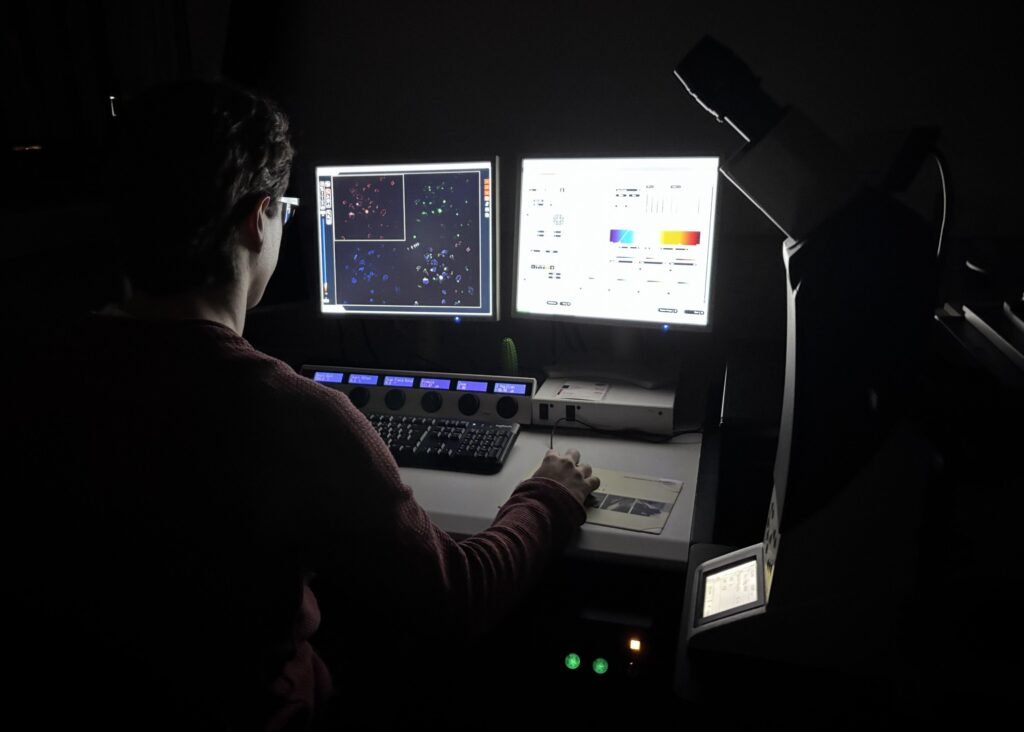
Confocal imaging in 3D and over time, so you see where a labelled molecule is – not just an average across the sample. Used to localise proteins, test interactions by FRET, map viscosity and ion levels by FLIM, and track single molecules.

Instruments Available:

  • Picoquant MicroTime 200

  • Leica SP5 Two-Photons

Particle Characterization​

Counting particles one at a time and determine their size.

asd

Instruments Available:

  • NanoSight LM100

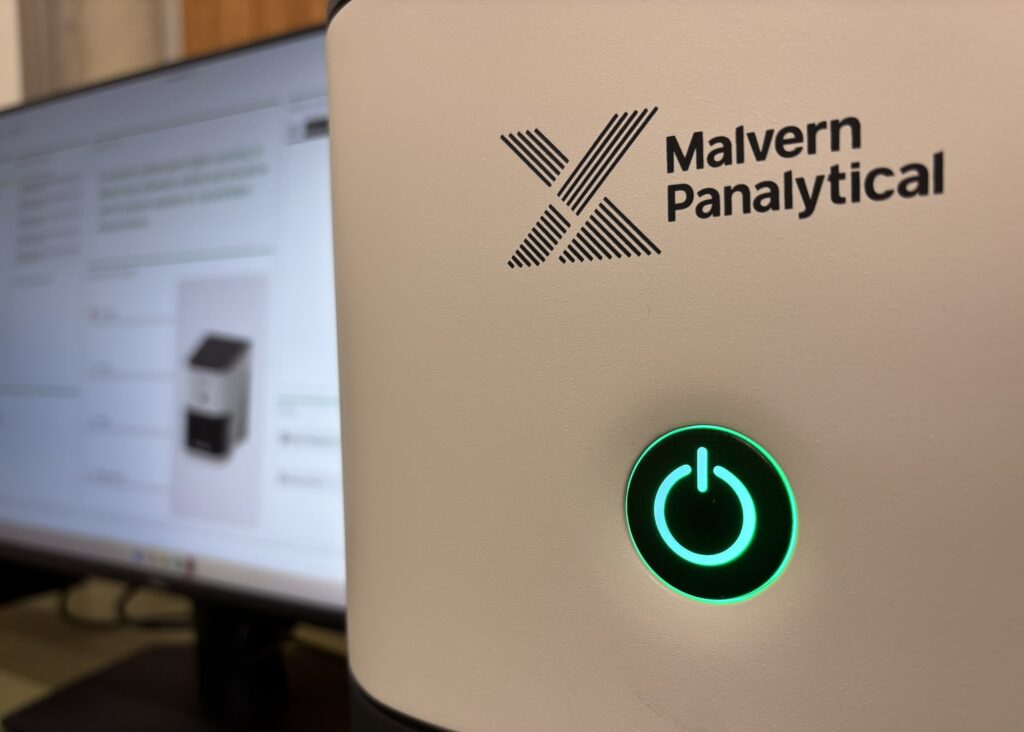
  • Malvern NanoSight Pro

  • Malvern Nano ZetaSizer

In the facility

The instruments behind the data.

Why work with us

More than instrument time.

Most people who come to us are not spectroscopists – they are finishing a thesis, writing a report, or answering a reviewer. Bring us your question: we help you choose the right measurement, plan the experiment, and train you to run the instrument yourself. After that, you work independently – and we are always there for whatever comes up.

Advanced Instrumentation

We have fifteen instruments across different spectroscopic techniques that are calibrated, serviced, and ready when you book.

Scientific expertise

Describe your question to our researchers who work with these techniques daily. Nothing gets measured without a discussion.

Technical support

Experiment planning, sample preparation, acquisition, and help interpreting the result.

Access

Groups from IST, groups from other institutions, and companies – we support everyone who needs us.

Training

Every new user is trained on the instrument before they book it. Our training is theoretical and hands-on.

An honest answer

We will tell you which measurement is worth your time – even when the right technique isn’t one of ours.

Questions and answers

What people ask before they write to us.

Write to us with three things: what the sample is, what you want to find out, and when you need it. That is enough. We reply with what we think is measurable, which instrument would do it, and what we would need from you.

No. It is the most common way a project starts. Describing the sample and the question is the useful part; naming the technique is our job, and getting it wrong at this stage costs you weeks.

No. Measurements can be run for you. If you expect to come back often, we would rather train you — it makes you faster and independent.

For several of them, yes, after training and with our agreement. Some systems stay operated by staff because the alignment or the laser safety does not allow otherwise.

Booking is arranged directly with us once we agree on the measurement. The formal booking procedure is being finalised.

Rates differ for internal, external academic and industrial users. Ask us and we will tell you what your case costs before anything is scheduled.

It depends entirely on the technique and the number of samples. We give you an estimate before you commit, and we tell you when the honest answer is that the measurement will take longer than your deadline allows.

Yes. If data from our instruments appears in a thesis, report or paper, please acknowledge the facility.

How do I start?

Write to us! Describe your sample, your research problem or the measurement you have in mind. You do not need to know the technique yet.

Write to us with three things: what the sample is, what you want to find out, and when you need it. That is enough. We reply with what we think is measurable, which instrument would do it, and what we would need from you.

No. It is the most common way a project starts. Describing the sample and the question is the useful part; naming the technique is our job, and getting it wrong at this stage costs you weeks.

No. Measurements can be run for you. If you expect to come back often, we would rather train you — it makes you faster and independent.

For several of them, yes, after training and with our agreement. Some systems stay operated by staff because the alignment or the laser safety does not allow otherwise.

Booking is arranged directly with us once we agree on the measurement. The formal booking procedure is being finalised.

Rates differ for internal, external academic and industrial users. Ask us and we will tell you what your case costs before anything is scheduled.

It depends entirely on the technique and the number of samples. We give you an estimate before you commit, and we tell you when the honest answer is that the measurement will take longer than your deadline allows.

Yes. If data from our instruments appears in a thesis, report or paper, please acknowledge the facility.

In the facility

The work behind the data.

Get in touch

Do you have a measurement in mind? Let’s discuss it.

Tell us about your sample, research question or measurement needs. We will help identify the most appropriate approach.

Not sure which technique you need? Describe your sample and your research question. Identifying the right approach is part of what we do.

Or write directly

osm-facility@tecnico.ulisboa.pt
Instituto Superior Técnico, Alameda Campus, Lisbon

You can attach data or images later, once we reply.